Introduction
Most commercial property owners think about their septic system exactly twice, when it’s installed and when it fails. That gap in between is where the real damage happens. Solid waste accumulates silently, drain fields absorb more than they’re built to handle, and what starts as a minor inefficiency becomes a system-wide failure that shuts operations down. No warning. No convenient timing. Just a crisis that costs far more than any maintenance schedule ever would.
At Best Septic Tank Pumping, we’ve seen this pattern repeatedly across properties in Florence, Salem, Eugene, and Springfield, OR, and every single time, it was preventable.
This blog breaks down what’s actually happening inside a neglected commercial septic system, the risks property owners don’t see coming, and why consistent commercial septic service is the only responsible approach for large properties.
Why Commercial Septic Systems Require Regular Maintenance
Commercial systems are engineered for high-volume use, but that doesn’t make them invincible. The volume that makes them functional is the same volume that accelerates wear without proper septic system maintenance.
The Scale Problem Most Owners Underestimate
A single-restaurant grease trap can accumulate months’ worth of buildup within weeks during peak season. Office buildings with hundreds of daily occupants push solids into tanks faster than residential systems ever would. When septic tank pumping isn’t scheduled around actual usage, not just a calendar date, the system is always playing catch-up.
| Property Type | Recommended Pumping Frequency |
| Restaurant / Food Service | Every 1–3 months |
| Office Building (200+ occupants) | Every 6–12 months |
| Retail / Mixed-Use Complex | Every 12 months |
| Industrial / Manufacturing | Every 3–6 months |
These aren’t conservative estimates. They reflect real-world usage patterns for high-traffic commercial properties.
Common Warning Signs of Commercial Septic Problems
Some warning signs are obvious. Others aren’t, and those are the dangerous ones.
The Signs That Get Ignored
Slow drains in a single restroom get blamed on a clogged pipe. A faint odor near the building’s exterior gets dismissed as a nearby dumpster. Slightly greener grass over the drain field looks like good soil. These are the early signals of a system under stress, and they don’t disappear on their own. Septic inspection services exist specifically to catch what surface-level observations miss.
Visible warning signs to act on immediately:
- Gurgling sounds from drains and toilets
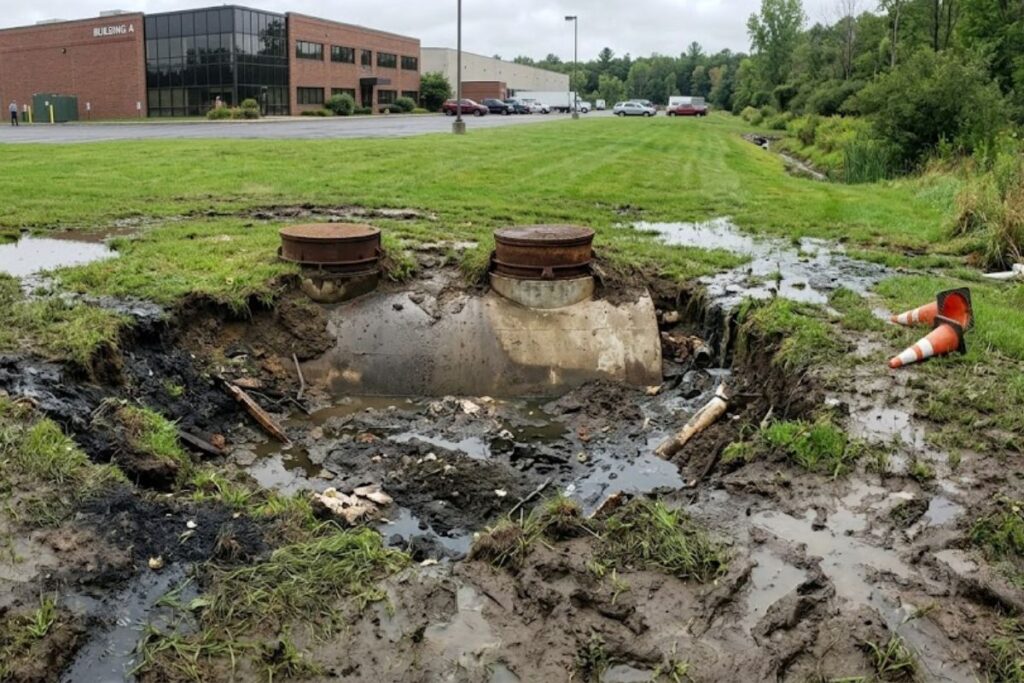
- Standing water or soggy ground near the tank or drain field
- Sewage backups in ground-floor or basement fixtures
- Persistent odors inside or outside the building
A neglected commercial septic system doesn’t ask for permission before it fails; it picks the busiest day on your calendar.
Hidden Risks of Delaying Commercial Septic Service
At this point deferred maintenance has become a legal and operational liability rather than a financial inconvenience.
1. Regulatory and Health Consequences
Oregon’s DEQ and local health departments hold commercial properties to strict commercial wastewater management standards. If effluent is surfacing in the vicinity of a public area and there has been a documented failure of the system, there can be citations, required inspections, and, in extreme circumstances, forced temporary closure. The regulatory exposure alone makes deferred septic maintenance services a risk no property owner should accept.
2. Environmental Damage That Doesn’t Reverse Easily
Saturated drain fields don’t recover quickly. Once a drain field fails from overloading, restoration can require full replacement, an extensive process that disrupts landscaping, parking areas, and operations. Properties near waterways, which are common across Lane County and the Willamette Valley, face additional scrutiny when effluent contamination reaches groundwater.
3. The Operational Reality
A backup doesn’t wait for a slow day. Sewage surfacing in a commercial kitchen, a hotel lobby, or a medical office waiting room creates an immediate shutdown scenario. Employees can’t work. Customers leave. Vendors get turned away. The reputational damage from a visible septic failure lingers long after the physical repairs are complete.
How Septic System Failures Can Impact Large Commercial Properties
Large properties aren’t just facing a bigger version of a residential problem; they’re facing an entirely different category of consequence.
When Systems Are Interconnected
Many large commercial properties run multiple tanks, pump chambers, and extended drain field networks. When one component fails under prolonged neglect, the stress doesn’t stay contained. It travels. A pump chamber failure backs pressure into the primary tank. A saturated drain field pushes effluent toward the surface. Commercial septic system repair at this scale isn’t a one-afternoon fix; it can take days and require excavation across significant portions of a property.
A study published by the Water Environment Research Foundation found that reactive maintenance in commercial septic systems costs substantially more over a ten-year period compared to scheduled preventive servicing, not just in direct repair costs, but in downtime, lost productivity, and remediation.
Preventive maintenance is a scheduled line item. Emergency repair is an unplanned crisis, and one always costs more than the other.
Benefits of Preventive Commercial Septic Maintenance
The case for staying ahead of septic tank cleaning and routine service isn’t complicated.
- System longevity: Regular pump-outs reduce strain on tanks and drain fields, extending the functional life of the entire system
- Regulatory compliance: Documented septic inspection services create a maintenance record that protects property owners during health department reviews
- Operational continuity: No unplanned shutdowns, no emergency vendor calls, no customer-facing incidents
- Predictable costs: Scheduled commercial septic pumping fits into a budget; emergency excavation does not
For properties across Salem, Eugene, Florence, and Springfield, OR, this isn’t just smart property management; it’s how businesses protect their operational stability year over year.
Why Professional Commercial Septic Services Matter
Residential experience is not commercial competence. Big systems need bigger gear, more diagnostic knowledge, and technicians who know how high-volume usage wears things out in ways you can’t see from the surface.
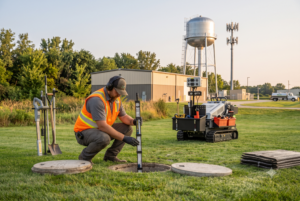
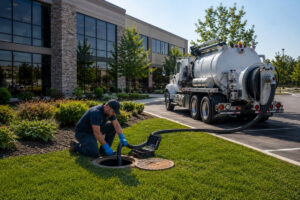
Professional commercial septic repair and maintenance providers bring calibrated equipment, high-capacity vacuum trucks, camera inspection tools, and load-rated access equipment, alongside the expertise to identify failing components before they cause a system-wide breakdown. There’s a measurable difference between a company that completes the service and one that actually understands what the system needs long-term.
At Best Septic Tank Pumping, our technicians serve commercial properties across Florence, Salem, Eugene, and Springfield, OR with a fleet of 1,000 to 4,200-gallon vacuum trucks and the hands-on experience to handle everything from routine septic tank cleaning to full-scale commercial septic system repair. We don’t treat commercial jobs like oversized residential calls; we approach them for exactly what they are.
Stop Waiting for a Failure to Take Action
A commercial septic system doesn’t announce its breaking point in advance. It gives small signals, gets ignored, and eventually forces a response that’s far more disruptive and expensive than any maintenance visit would have been. The properties that manage this well aren’t lucky, they’re consistent.
Best Septic Tank Pumping provides comprehensive commercial septic service and commercial wastewater management across South Linn, South Benton, Marion, Polk North, Douglas, and all of Lane County. Whether it’s routine septic maintenance services or commercial septic pumping, emergency response, and full system repairs, our team is ready to keep large commercial properties running smoothly.
Don’t wait for the system to make the decision for you. Call Best Septic Tank Pumping today at (541) 484-0844 to schedule your commercial septic service or septic inspection services, before the system schedules it for you.