Introduction
A septic system is almost completely silent until it breaks, and then the warning is almost always underground, not visible. A line can be ruptured, or a tank lid can be crushed long before anyone is aware of a problem on the surface- just one strike of a shovel, a fence post in the wrong place, or heavy equipment in the wrong place. The real danger is not knowing exactly where your system is. Best Septic Tank Pumping exists to fill that gap before it costs you.
This blog breaks down how professional septic location services actually work, why accurate mapping changes everything about safe digging, and what septic tank riser installation does for long-term access. We’ll also look at the technology behind modern septic tank locating and what it really takes to prevent septic system damage before it starts.
Why Knowing Your Septic System’s Location Matters
Most homeowners can tell you where their kitchen sink drains to, but not many can point out their tank lid without guessing. That gap in knowledge is not harmless. It’s the number one reason routine yard work turns into an emergency repair call.
The EPA estimates that nearly 21.5 million American households use septic or similar onsite systems to treat their wastewater, but most of those systems were installed once and never mapped again after being buried. Records are lost, owners change, and the exact location of the tank, lines, and drainfield quietly fades from memory.
A buried system you can’t locate is a system you can’t protect. That single fact drives almost every other decision in this blog.
Professional Septic Tank Locating: Finding What Lies Beneath Your Property
Septic systems used to be something that involved digging test holes and hoping for the best. This is a slow, destructive, and often wrong way to go. Modern septic tank locating replaces guesswork with equipment engineered for exactly this job.
1. The Technology Behind Modern Septic Locating
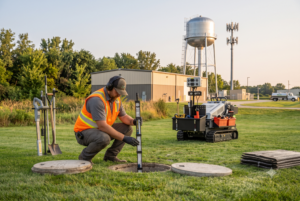
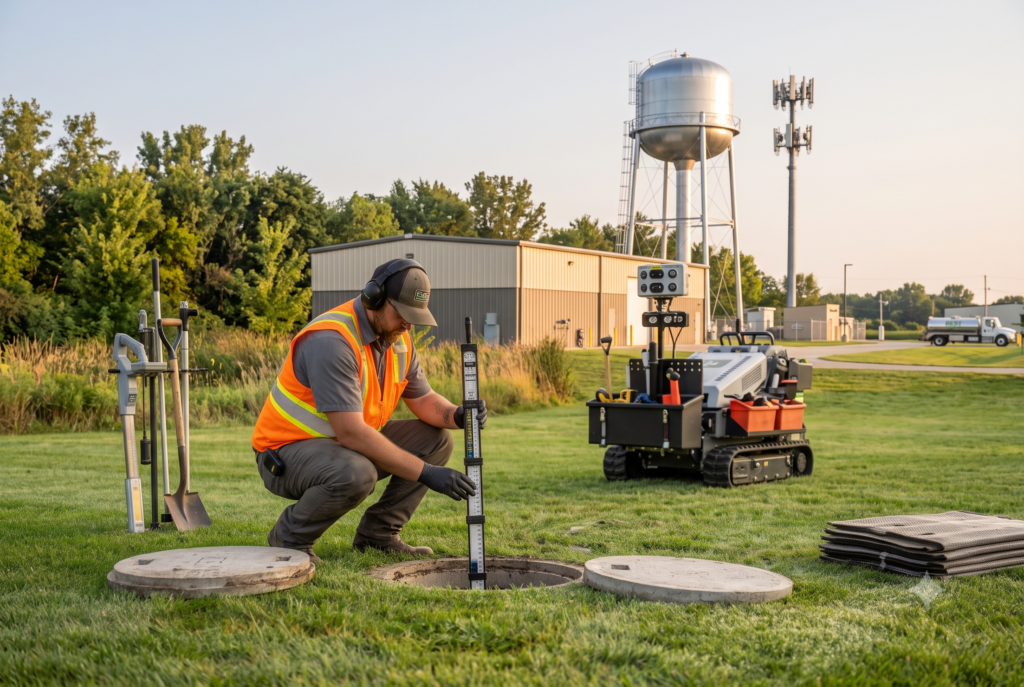
Technicians commonly use a small electronic device called a sonde, which is either flushed through the plumbing or pushed into an accessible line. Once inside, it gives off an electromagnetic field, generally around 512 Hz, which travels with it as it moves through the pipe. A hand-held receiver above ground picks up that signal and locates the tank’s position, depth, and orientation without a shovel ever touching the yard.
This method is even more important for pipes that carry no electrical signal themselves. Standard electromagnetic locators are effective on metal utilities and tracer wire. Non-metallic pipes like PVC typically need ground-penetrating radar, acoustic methods, or a sonde-based approach. It’s a detail most homeowners don’t learn until a technician tells them on-site.
2. What Happens When Locating Is Skipped
Skip this step, and you’re left with old permits, faded memory, or visual guesswork. That guesswork is what gets you snapped lines, cracked risers, and drainfields compacted by equipment that had no idea what it was driving over.
Septic System Mapping and Marking for Safer Digging and Maintenance
Locating tells you where the system is once. Mapping makes that information permanent, so you’re never solving the same mystery twice.
A good map will show where the tank is located, the depth of each line, the layout of the drainfield, and the distance from fixed points such as the foundation or property line. Turning the map into physical flags or stakes that anyone working on your property can see immediately is called marking turns.
| Guesswork or Old Records | Professional Mapping & Marking | |
| Accuracy | Assumed, often outdated | Confirmed at time of service |
| Digging risk | High | Minimal |
| Reusability | Fades with time | Stays accurate for years |
| Project delays | Common | Rare |
Once your system is mapped, every future contractor, landscaper, or inspector inherits that accuracy instead of starting from zero.
How Septic Line Locating Prevents Costly Underground Damage
Of all the components of a septic system, lines take the most abuse, mainly because they’re the easiest part to forget. Sometimes it’s just one unmarked pipe run under a planned garden bed, deck footing, or irrigation trench that can cause serious damage.
Septic Tank Risers: Easier Access for Pumping and Routine Maintenance
Even if the system is well documented, if you have to dig to get at the tank lid every time, it’s a pain to service. That was precisely what risers were built to fix.
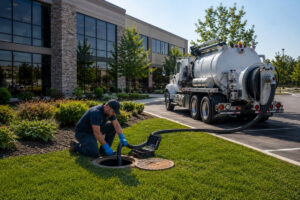
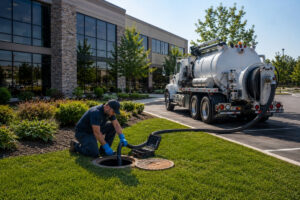
Septic tank riser installation extends the access point up to ground level, permanently. Instead of a buried lid requiring excavation before every pumping visit, technicians simply open the riser cover and go straight to work. It’s a small, one-time upgrade that changes how every future service call goes.
Beyond convenience, risers also protect the tank lid itself from the repeated stress of being uncovered and recovered, which lowers the chance of cracks developing over time. Once installed, septic tank location for pumping stops being a question and becomes a two-minute answer.
Prevent Septic System Damage and Reduce Long-Term Maintenance Costs
Preventative care is always better than emergency repair, and the data unequivocally backs that up. The EPA recommends homeowners get their system inspected by a qualified professional about once every three years and have pumping done as necessary, which is typically every three to five years.
That rhythm, paired with accurate mapping and easy riser access, is what actually builds septic maintenance cost savings over time. Systems that are located, marked, and inspected on schedule rarely reach the point of drainfield failure, which is by far the most expensive outcome a septic owner can face. Systems that are ignored almost always do.
Protect Your Property With Accurate Septic System Mapping
No two properties sit on the same soil; no two septic systems age the same. In systems installed many years ago, things may have settled, moved, or been altered by prior owners in ways that existing records do not reflect.
That’s precisely why an updated map matters more than an old permit ever could. Homeowners planning a renovation, preparing to sell, or simply tired of guessing benefit the same way: fewer surprises, faster projects, and a system that’s finally working with you instead of against you.
A Clear Path Forward for Every Septic Owner
Locating, mapping, and marking your septic system isn’t optional maintenance; it’s the difference between a yard project that goes smoothly and one that ends in an emergency call. Every section above points to the same conclusion: the homeowners who know exactly where their system sits are the ones who avoid its worst failures.
Best Septic Tank Pumping brings the equipment, training, and hands-on experience needed to locate, map, and mark your system accurately, then back it up with riser installation and routine service that keeps everything running the way it should. We serve homeowners throughout Salem, Eugene, Florence, and the surrounding areas, and we treat every property as its own unique job, not a copy-paste service call.
If you can’t confidently say where your septic tank sits right now, that’s the first problem worth solving. Reach out to our team today to schedule professional locating, mapping, or riser installation before a simple yard project turns into an expensive one: (541) 484-0844.