An Introduction
Wastewater doesn’t announce itself until it’s already a problem, and by the time a business owner notices something is wrong, the septic system has usually been struggling for weeks. A slow drain today can mean a flooded parking lot or a health department visit next month. It’s that space between “minor annoyance” and “operational shutdown” that Best Septic Tank Pumping specializes in, catching problems long before customers ever notice them.
This blog looks closely at how commercial systems actually fail, the technical warning signs most owners overlook, and what separates a system that lasts decades from one that fails within a few years. Along the way, we’ll cover the regulatory details, the science of wastewater and the timing of maintenance that really matters to businesses.
Understanding Commercial Septic Systems
A commercial septic system isn’t just a bigger version of a home system. It is designed for the occupancy load, the makeup of the wastewater, and the spikes in usage that residential systems never encounter. That is why treating them the same way almost always backfires.
1. How Wastewater Volume Changes by Business Type
A quiet office generates a fairly predictable, low volume of wastewater across the day. A restaurant, by contrast, can push years of typical grease and solids through its system in a single busy season if its septic system maintenance plan doesn’t account for that intensity.
2. The Threshold Most Business Owners Don’t Know About
Under many state and local codes, nonresidential properties discharging less than 10,000 gallons of wastewater per day can typically still use an onsite septic system rather than connecting to municipal sewer, since toilet waste and sink wastewater can be discharged to a septic system as long as it’s less than 10,000 gallons per day. The fact is that very few business owners even realize that their system is running with a defined capacity limit, and even fewer know how close their daily usage is to that limit.
A system that looks fine on the surface can already be operating past its intended capacity underground.
Common Causes of Commercial Septic System Failures
Most commercial septic failures trace back to a small number of repeat offenders, and nearly all of them are preventable with the right commercial septic maintenance routine in place.
1. Grease and FOG Buildup
Fats, oils, and grease are the single biggest threat to a commercial system tied to a kitchen. Levels are found to exceed acceptable treatment parameters by as much as 100 times normal residential levels, enough to disable a drainfield in a comparatively short time. Independent wastewater testing on typical restaurant operations has found that grease and solids levels can exceed acceptable treatment parameters by up to 100 times normal residential levels, meaning the drain field and other system components can be rendered inoperable in a comparatively short time.
2. Hydraulic Overload During Peak Hours
Meal-rush dishwashing creates a surge of wastewater that moves through the system far faster than grease can properly separate out, since surge water loads push wastewater through the grease trap too rapidly for grease to separate. Over time, nothing looks wrong, but that repetitive surge pattern wears down a system’s ability to properly treat wastewater.
3. Neglected Grease Trap Cleaning Cycles
Grease traps left uncleaned for too long allow grease to harden, which makes eventual pumping far more difficult and often incomplete, since leaving grease in the trap too long causes it to harden and become very difficult to pump out. Most jurisdictions require grease traps to be cleaned when grease reaches approximately one quarter of the effective depth of the trap, or at least several times a year, with grease traps usually being inspected monthly and cleaned when grease builds up to 25% of the trap’s effective depth, or at least once every three months, whichever occurs first.
Warning Signs Your Business Needs Commercial Septic Service
A failing system rarely stays quiet for long. The signals tend to appear in two very different places, and business owners often check only one of them.
1. Signs Inside Your Building
The first signs are usually gurgling drains, slow-draining sinks, and unexplained smells near restrooms or kitchen areas. The signs are of a system already under strain, even if nothing has backed up yet.
2. Signs Outside on Your Property
Soggy or unusually green patches near the drainfield, standing water after dry weather, or a persistent smell outdoors typically mean the system has moved past early warning and into active failure territory.
| Reactive Approach | Proactive Approach |
| Waits for visible backups or odors | Catches wear through scheduled septic inspections |
| Deals with emergency shutdowns | Plans service around business hours |
| Faces unpredictable disruption | Follows a known maintenance calendar |
| Often needs full drainfield work | Usually needs smaller, targeted septic system repairs |
How Regular Commercial Septic Service Prevents Costly Repairs
The research on septic failure is pretty consistent. Systems that go without maintenance fail much more often than those on a defined schedule, with estimated failure rates ranging from about 3% to more than a third of all systems, depending on how failure itself is defined. That range is partly because “failure” is often caught late, after the time it could have been prevented.
Why Pumping Schedules Should Match Business Volume, Not the Calendar
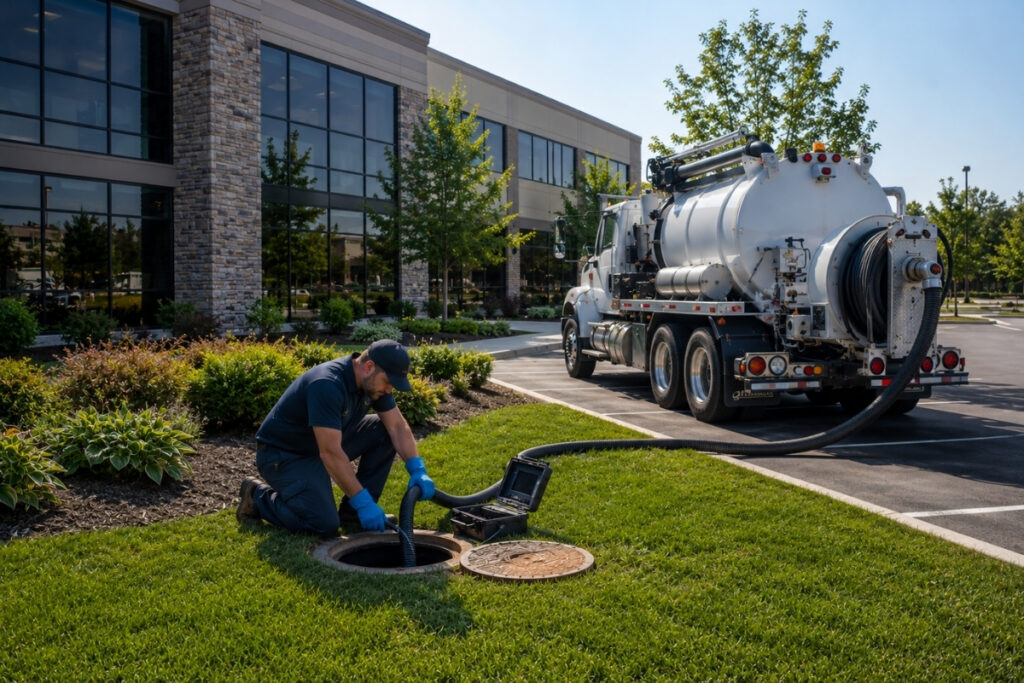
A fixed once-a-year pumping schedule makes little sense for a business whose wastewater output shifts seasonally. Commercial septic pumping timed to actual usage, rather than a generic calendar date, keeps solids from accumulating past the point at which a system can safely manage.
Federal guidance is direct about the trade-off here: consistent maintenance costs a fraction of what emergency repair or replacement eventually demands, since regular maintenance is a comparatively modest expense next to the cost of repairing or replacing a malfunctioning system. That gap doesn’t stay the same if it’s not addressed. Each month, the failing system operates under load.
Benefits of Hiring Professional Commercial Septic Service Providers
Not every septic company knows the difference between a residential and commercial system, and that difference shows up quickly when a business tries to rely on the wrong provider.
Local Expertise Across Different Business Types
Best Septic Tank Pumping works with restaurants, offices, and other commercial properties throughout Springfield, Salem, Eugene, Florence, and the surrounding Lane County region, which means our team has seen how differently these systems behave depending on what runs through them daily. That kind of familiarity is difficult to replace with a provider unfamiliar with local conditions and codes.
A professional septic service provider also documents service history over time, which matters more than most business owners expect. That kind of familiarity is hard to find with a provider who doesn’t know local conditions and codes.
Keeping Your Business Running Without Interruption
A commercial septic system that’s ignored doesn’t stay quiet indefinitely. It fails on its own schedule, usually during the busiest possible moment, and the businesses that avoid that outcome are the ones treating septic tank service as a routine part of operations rather than an afterthought.
Best Septic Tank Pumping brings that exact approach to every property we service, offering septic maintenance services built around how a business actually operates rather than a generic template. From scheduled pumping to full commercial septic service and everything in between, our team works to keep systems functioning well before small issues become expensive ones.
If your business hasn’t had a system evaluation recently, or any of the warning signs above sound familiar, don’t wait for the problem to make the decision for you. Call us today at (541) 484-0844 to schedule your commercial septic maintenance and protect your business from downtime you can’t afford.