Introduction
Your septic system quietly processes thousands of gallons of waste every year. And most homeowners don’t even think about it until something goes terribly wrong. Raw sewage is flooding into your home. A yard that stinks of a landfill. The drain field is in bad shape and needs to be totally replaced. These aren’t worst-case scenarios; they’re what happens when septic tank pumping gets pushed to the back burner for too long. The EPA estimates that 20% of U.S. homes rely on septic systems, yet most owners have no idea what a proper service visit even looks like. If you’re in Florence, Salem, Eugene, or Springfield, OR, Best Septic Tank Pumping is the team that handles this the right way, every single time.
This blog walks you through the entire septic pumping process, step by step, so you know exactly what to expect during septic pumping and why each step matters more than you think.
Before the Truck Arrives: How Homeowners Can Prepare
Preparing for septic tank pumping is simple, but skipping it costs you time and money.
- Locate and mark your tank lid. If it’s buried, let the technician know in advance.
- Don’t run heavy water loads, such as dishwashers, laundry, and long showers, the night before.
- Clear the area of vehicles, equipment, or anything blocking tank access.
- Have your last service date handy. This helps the technician assess buildup levels accurately.
Did You Know? When water use is high, it can take a family of four less than two years to fill a 1,000-gallon septic tank to dangerous sludge levels, long before most homeowners start thinking about scheduling service.
Step 1: Arrival and Site Assessment
A professional septic service visit doesn’t start at the tank; it starts with observation.
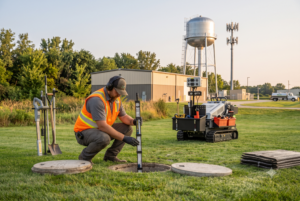
Before any equipment comes out, the technician walks the property. If you see soggy spots over the drain field, unusually green grass, or surface odors, these are all signs that more than routine pumping is needed. This evaluation is the mood-setter for the whole visit, and it’s something that less thorough providers simply don’t do.
Step 2: Opening the Tank and Initial Inspection
Once the lid is located and uncovered, the real diagnosis begins.
What the Technician Looks For Immediately
- Liquid level relative to the outlet pipe, if it’s abnormally high, there may be a drain field issue
- Visible scum crust thickness at the surface
- Condition of inlet and outlet baffles
- Any signs of root intrusion, cracks, or structural damage
This isn’t a glance; it’s a professional evaluation of the current health of your system.
Step 3: Measuring Sludge and Scum Levels
Most homeowners have never heard of a sludge judge. It’s a clear, calibrated tube that technicians slide into the tank to get a precise measurement of how deep the sludge layer is sitting at the bottom, and how thick the scum layer is floating at the top.
| Layer | Composition | Action Needed When… |
| Scum | Grease, oils, floating solids | Within 3 inches of outlet pipe |
| Effluent | Liquid wastewater | Should remain relatively clear |
| Sludge | Heavy settled solids | Within 12 inches of outlet pipe |
The EPA recommends pumping before sludge reaches one-third of the tank’s liquid depth.
Most tanks get to this point long before the homeowner expects, especially in larger households.
Step 4: Pumping Out the Tank
This is the core of the septic pumping step by step process, and it’s more involved than most people realize.
How the Pumping Actually Works
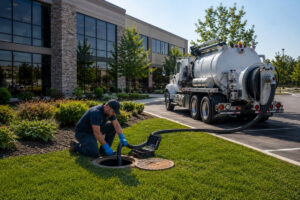
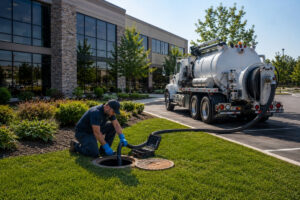
The vacuum hose is pushed through the access port, and the truck pulls out the whole contents – sludge, scum, and effluent together. Some providers do partial pumping to save time, but it leaves behind sludge and speeds up future buildup.
Best Septic Tank Pumping operates vacuum trucks ranging from 1,000 to 4,200 gallons, built to handle full residential tank evacuations in a single visit. The process typically takes 20 to 60 minutes, depending on tank size and fill level.
How Often to Pump Your Septic Tank
How often to pump your septic tank is based on household size and tank capacity:
| Household Size | Tank Size | Recommended Frequency |
| 1–2 people | 1,000 gal | Every 4–5 years |
| 3–4 people | 1,000 gal | Every 2–3 years |
| 5+ people | 1,000 gal | Every 1–2 years |
| Any size | 1,500+ gal | Every 3–5 years |
The uncomfortable truth: Missing one pumping cycle not only shortens the life of your tank but can also allow untreated sewage to enter your drain field, permanently damaging your drain field beyond repair, even if you have your tank pumped out.
Step 5: Cleaning and Rinsing
Water is used to flush and agitate the inner walls when the tank is empty, dislodging hardened residue that remains after pumping. The loosened material is then vacuumed out on a second pass.
Many providers skip this step, leaving behind a buildup that accelerates future sludge accumulation. It is a shortcut that costs the homeowner in the long run.
Step 6: Detailed Inspection of Tank Components
With the tank clean and empty, this is the best possible window for a full septic tank inspection and pumping evaluation.
What Gets Checked
- Baffles: Drain field contamination is often caused by a failed baffle. Technicians look for cracks, corrosion, and proper alignment.
- Tank walls and base: Hairline fractures and root intrusion are easier to spot in an empty tank.
- Lid integrity: A deteriorating lid allows groundwater infiltration, which overloads the system.
If there are problems, you’ll get a clear, documented explanation, not some vague suggestion to “come back for repairs.” Septic tank inspection and pumping done right means you leave with a full picture of your system’s condition.
Step 7: Closing Up, Cleanup, and Disposal
The tank is resealed, excavated soil is returned and leveled, and the work area is cleaned before the team leaves. Waste collected during visit is taken to a licensed treatment facility, eco-compliant disposal is a legal requirement not optional.
You’ll receive a service summary: what was done, what was found, and when your next visit should be scheduled. That documentation matters for home sales, insurance claims, and warranty purposes.
Your Septic System Deserves Better Than Guesswork
Residential septic maintenance isn’t complicated when you understand what’s actually happening inside the tank. There are real consequences to short-changing this process, from measuring the sludge to final inspection, namely failed drain fields, sewage backups, and system replacements that could have been avoided altogether.
Best Septic Tank Pumping provides this level of thorough, documented service to homeowners across Florence, Salem, Eugene, and Springfield, OR. Our team handles everything, routine septic tank pumping, full septic tank inspection and pumping, emergency calls, and long-term residential septic maintenance, with the same commitment to doing it right the first time.
If you’ve been searching for dependable septic system service near me, the answer is one call away. Reach out to Best Septic Tank Pumping at (541) 484-0844 to schedule your visit. Don’t wait for the warning signs, by then, the damage is already done.