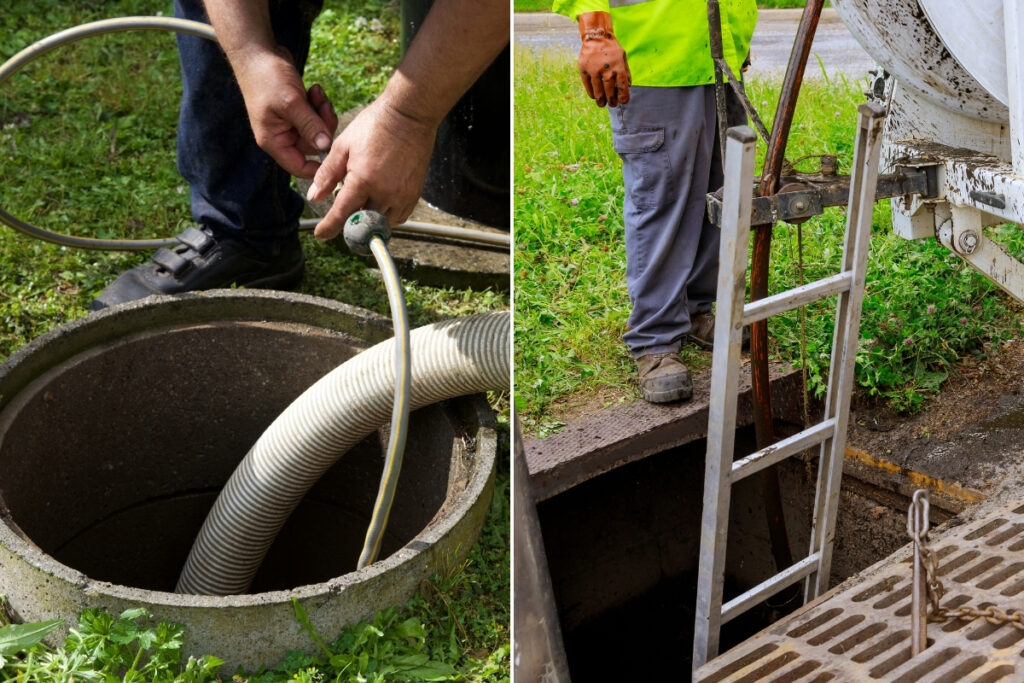
One of the most common questions septic professionals hear is simple: Do I need to have my tank pumped, or is something broken that needs a repair? The problem is that both situations can look similar at first—slow drains, odors, wet ground—until the system reaches a breaking point.
For homeowners in Florence, Salem, Eugene, Springfield, OR, and the surrounding areas, knowing how to spot the difference in your septic tank can save thousands and prevent serious disruptions.
Septic systems give clues. You just need to know how to read them. This article walks you through what those clues mean, what’s normal, what’s not, and how to decide your next move with confidence.
How a Septic Tank Works
Your septic tank sits buried in your yard doing a job that’s both simple and crucial. Wastewater from your house flows into this large underground container, where nature takes over.
- Separation of Waste: The heavy stuff sinks to the bottom. Grease and oils float up top. Everything else stays in the middle.
- Biological Breakdown: Bacteria living in the tank break down waste naturally. This process happens without any help from you—it just works.
- Effluent Flow: The liquid in the middle layer flows out to your drain field, where soil filters it before it reaches groundwater.
The EPA says a well-maintained system lasts 20-30 years. Skip maintenance, though, and you’re looking at expensive failures much sooner. They also point out that one in five American households depends on septic systems—that’s over 21 million homes nationwide.
Here’s what’s actually down there working for you:
| Component | Role |
| Tank | Collects and separates waste solids |
| Filter | Keeps solids from exiting to the drain field |
| Drain Field | Absorbs liquid into the soil |
| Pipes | Carry wastewater from the home |
When any piece stops working right, you’ll notice problems throughout your house and yard.
Did You Know?
Most septic failures aren’t sudden. They happen after years of pushing too much water or too many solids through the system. By the time symptoms show up, the tank has usually been struggling for a while.
Common Signs It’s Time to Pump
Most people ask: “How often should I pump my tank?” You’ll hear “every three to five years” thrown around, but that’s really just a starting point. The real answer shows up in what you observe around your property.
Watch for these signs that your septic tank in Florence (or elsewhere) needs pumping soon:
✔ Drains moving slower than usual—sinks, showers, toilets
✔ Gurgling noises when water goes down
✔ Sewage smell hanging around drains or outside
✔ Grass staying wet in spots near your septic system
These symptoms tell you solids have piled up and need to be removed. Wait too long, and you’re not just looking at a pump issue—you might be dealing with damaged pipes or a failed drain field. That gets expensive fast.
Pumping Frequency Guidelines
How often you pump depends on your household. Bigger families create more waste. Garbage disposals add extra solids. Here’s what the data shows:
| Household Size | Tank Size | Recommended Pumping Interval |
| 1–2 people | 1,000 gallons | Every 5–7 years |
| 3–4 people | 1,000 gallons | Every 3–5 years |
| 5+ people | 1,000 gallons | Every 1–3 years |
| Any household with a garbage disposal | Any size | Pump about 50% more frequently |
From the EPA septic guidelines
Warning Signs You May Need a Repair
Sometimes pumping won’t fix what’s wrong. Your system can develop problems that need actual repairs—not just emptying the tank.
Look out for these red flags:
- Sewage smell that sticks around even after pumping
- Standing water near the tank or in the drain field
- Super green, lush grass in one specific area (nutrients leaking from below)
- Sewage is backing up into your house
Repairs mean fixing or replacing broken parts—baffles that have deteriorated, cracked tank lids, failed drain fields, or damaged pipes. These jobs require specialists who know what they’re doing underground.
For residents with a septic tank in Eugene (and everyone else), here’s how to tell pumping from repair needs:
| Symptom | Likely Solution | Urgency Level |
| Slow drains throughout the house | Pumping | Moderate – schedule within weeks |
| Sewage backing up into the home | Emergency pumping or repair | Immediate – call today |
| Odors that come and go | Pumping | Low to moderate – plan soon |
| Standing water over the drain field | Repair or replacement | High – needs professional assessment |
| Cracked tank lid or broken baffle | Repair | High – can worsen quickly |
| Gurgling pipes after recent pumping | Repair (likely drain field) | Moderate to high – investigate promptly |
Here’s a Pro Tip from the Field
If you’ve recently had your septic tank pumped, but problems like gurgling drains, odors, or soggy ground continue, pumping wasn’t the real issue—it just exposed it. That usually points to drain field trouble or to damaged components that need professional repair, not another pump.
When symptoms come back quickly, it’s a sign to stop guessing and get the system inspected properly.
Simple Homeowner Checks Before Calling the Pros
Before you call anyone, take a walk around your property and do some basic checks. You don’t need special equipment—just your eyes, nose, and ears.
- Walk around your septic area looking for wet spots or grass that’s greener than everything around it.
- Smell around drains inside and outside—a persistent sewage odor means something’s wrong.
- Listen when water drains—gurgling sounds indicate air trapped in pipes.
- Think about recent water use—did you suddenly have guests staying over or do more laundry than normal?
These checks won’t replace what a professional sees, but they give you information to share when you make that call. They also help you catch problems earlier rather than later.
If you’re a septic tank homeowner in Springfield, OR, keeping notes on what you observe helps tremendously. Keep a record of dates, anything odd you’ve spotted, and times when water use was heavier than usual. When technicians show up, having this information helps them figure out what’s going wrong much quicker.
Why Professional Inspection Matters
Once you suspect trouble, getting a professional inspection changes guesswork into facts. Technicians do more than just tell you something’s wrong—they identify the specific issue, locate where it’s happening, and determine what’s needed to repair it.
During an inspection, professionals look at:
- The tank’s condition and how much sludge has piled up
- Whether the drain field is still functioning the way it should
- The state of pipes and any signs of cracks or damage
- How effectively does wastewater flow and spread out
A complete evaluation like this prevents wasting money on unnecessary repairs and catches developing problems before they turn into full-blown emergencies. Someone with training and experience can recognize early signs of wear, anticipate what might fail next, and put together a maintenance schedule that fits your specific property needs.
Did You Know?
The EPA estimates that more than 21 million homes across the country have septic systems. Regular professional inspections keep these systems working and protect groundwater—especially important in areas with sensitive water sources.
Preventive Tips So You Don’t Have to Guess Next Time
Septic maintenance is simpler than most people think. It just needs consistent, smart care.
Follow these practices that keep systems running longer:
- Monitor water use: Flooding your system with too much water at once causes problems.
- Avoid flushing non-biodegradables: Only human waste and toilet paper go down.
- Know your tank’s age and size: This information determines your pumping schedule.
- Keep records of every service visit: Patterns become obvious when you track history.
Think of septic maintenance like car maintenance—regular oil changes beat engine replacements. Prevention costs less and saves headaches.
More ways to protect your system:
- Grease, oil, and cooking fat never go down drains
- Harsh chemical cleaners kill the helpful bacteria your tank needs
- No parking vehicles or heavy equipment over the drain field
- Route roof gutters and surface water away from your septic area
- Only plant grass over drain fields—tree and shrub roots cause damage
Final Takeaway: Your Septic System Deserves the Best Care
Figuring out whether your system needs pumping or repair isn’t mysterious—it’s about paying attention, understanding what you’re seeing, and knowing when to call in professionals. Slow drains, bad smells, and soggy yard spots aren’t things to ignore. Is your system telling you something needs attention?
When you’re ready for professional help, experienced technicians can make all the difference. Our team at Best Septic Tank Pumping offers routine septic tank pumping, thorough inspections, and repairs across Florence, Salem, Eugene, Springfield, OR,and nearby areas. Homeowners throughout the Willamette Valley get better results working with our professionals who know the region’s soil characteristics and local requirements inside and out.
Want to avoid septic headaches down the road? Call Best Septic Tank Pumping at (541) 484-0844 for dependable service from experienced pros.